
Ceramic coating can help reduce the appearance of minor water spotting by creating a hydrophobic surface that makes water bead and run off the paint more easily. It does not remove existing mineral deposits or guarantee water spots will never form, but a properly applied coating can make the surface easier to maintain and help reduce contaminant bonding.
How Do Water Spots Form On Automotive Paint
Water spots typically occur when droplets of water remain on a vehicle’s surface and evaporate. The remaining minerals can leave visible rings, spots, or cloudy marks.
Common sources of water that may contribute to spotting include:
- Rainwater
- Sprinklers
- Hard water used during washing
- Standing water
- Water left on the vehicle after cleaning
The severity of spotting depends on the water’s mineral content, how long droplets remain on the paint, and environmental conditions.
Minor deposits may only affect the appearance of the finish. More severe or long-standing deposits can etch into the clear coat and require professional paint correction or other restoration methods.
Can Ceramic Coating Prevent Water Spots
Ceramic coating can help reduce the likelihood and severity of some water spotting, but it cannot completely prevent water spots. Its hydrophobic properties encourage water to bead and move across the surface rather than remaining evenly distributed.
This can make it easier to remove water before mineral deposits become established.
However, hydrophobic behavior does not mean that water automatically disappears from the vehicle. Droplets can still remain on the surface, particularly when the vehicle is parked outside or exposed to irrigation systems.
For vehicle owners considering ceramic coating in Bradenton, FL, understanding this distinction is important. View paint protection as part of a broader maintenance strategy, not a permanent solution to every water-spotting problem.
How Does Ceramic Coating Affect Minor Water Spots
A ceramic coating can make minor contamination easier to manage because the coating creates a protective layer over the vehicle’s clear coat.
When water contacts a hydrophobic coated surface, it tends to form tighter droplets. Depending on the coating and conditions, these droplets may roll or move away more readily than water on an uncoated surface.
This can provide several practical advantages:
- Less water remaining on the surface
- Easier removal of fresh deposits
- Reduced bonding of certain contaminants
- Easier routine washing
- Additional protection for the underlying paint
The coating does not eliminate the minerals in the water. It changes the surface characteristics, which can help with maintenance.
Can Ceramic Coating Remove Existing Water Spots
Ceramic coating is not designed to remove existing water spots. If mineral deposits are already present, the paint should generally be cleaned and evaluated before a coating is applied.
The appropriate treatment depends on the severity of the spotting.
Fresh Water Deposits
Definition: Mineral residue that has recently formed and has not significantly bonded to or etched into the paint.
Potential Treatment: Proper washing and appropriate surface cleaning may be sufficient.
Moderate Water Spots
Definition: More established mineral deposits that remain visible after normal washing.
Potential Treatment: A professional may use specialized chemical or mechanical correction methods depending on the surface.
Etched Water Spots
Definition: Mineral deposits that have chemically or physically affected the clear coat.
Potential Treatment: Paint correction or another professional restoration process may be necessary.
Applying a coating over untreated water spots can preserve the existing appearance underneath the coating, which is why proper preparation matters.
What Is The Difference Between Water Spot Resistance And Water Spot Prevention
These terms are sometimes used interchangeably, but they describe different concepts.
Water spot prevention would imply that a coating completely stops water spots from forming. Ceramic coating does not provide that guarantee.
Water spot resistance refers to making the surface easier to maintain and potentially reducing the tendency of contaminants to bond strongly.
| Characteristic | Uncoated Paint | Ceramic-Coated Paint |
| Water Behavior | Water can spread across the surface | Water tends to bead more strongly |
| Mineral Exposure | Direct exposure to paint surface | Coating provides an additional surface layer |
| Maintenance | Requires routine washing | Can be easier to maintain |
| Water Spots | Can still occur | Can still occur |
| Existing Spots | Remain until treated | Coating does not remove them |
The coating changes how water interacts with the surface, but regular maintenance remains necessary.
Why Is Proper Preparation Important Before Ceramic Coating
Ceramic coating bonds to the vehicle’s prepared surface. Any contamination or paint imperfections left underneath can affect the final appearance.
Professional preparation may include:
- Thorough washing
- Chemical decontamination
- Mechanical decontamination when necessary
- Paint inspection
- Paint correction when appropriate
- Final surface preparation
Paint correction can be particularly important when water spots have already affected the finish.
The objective is to create the cleanest practical surface before the coating is applied.
Common Myth: Ceramic Coating Makes A Vehicle Completely Water-Spot Proof
A common misconception is that ceramic coating makes a vehicle completely immune to water spots. While ceramic coatings can provide hydrophobic properties and make maintenance easier, they cannot prevent mineral deposits from forming under every circumstance.
Water can still dry on a coated vehicle. If mineral-rich water remains on the surface, residue can develop.
This is why vehicle owners should still dry the vehicle after washing when practical and avoid allowing sprinkler water to repeatedly land on the paint.
Ceramic coating should be considered an additional protective layer, not a substitute for proper vehicle care.
What Factors Make Water Spots More Noticeable
Several factors influence the likelihood and appearance of water spots.
Water Mineral Content
Water containing higher levels of dissolved minerals can leave more visible residue after evaporation.
Heat And Sun Exposure
When water evaporates quickly under warm conditions, minerals can remain concentrated on the paint.
Time
The longer water remains on the surface, the more opportunity deposits have to remain after evaporation.
Paint Condition
A well-maintained glossy surface may make spotting more noticeable because deposits contrast with the surrounding finish.
Washing Practices
Allowing a vehicle to air-dry after washing can leave mineral deposits, particularly when using water with significant mineral content.
Understanding these factors helps owners make better decisions about paint protection and maintenance.
How Should A Ceramic-Coated Vehicle Be Maintained
Proper maintenance is important for preserving both the appearance of the vehicle and the performance of the coating.
Recommended practices include:
- Wash the vehicle regularly
- Use products suitable for coated surfaces
- Avoid abrasive cleaning methods
- Remove bird droppings and other contaminants promptly
- Dry the vehicle thoroughly when practical
- Avoid parking where sprinklers repeatedly contact the paint
Consistent maintenance can help prevent minor contamination from becoming more difficult to remove.
For drivers researching ceramic coating in Bradenton, professional guidance can help establish an appropriate maintenance routine based on the vehicle and coating.
Can Professional Ceramic Coating Improve Vehicle Appearance
Yes. Ceramic coating can enhance the visual characteristics of properly prepared automotive paint by increasing gloss and creating a smooth, reflective appearance.
The final result depends heavily on the condition of the paint before installation. A coating cannot correct deep scratches, severe oxidation, or established water-spot etching on its own.
Professional preparation helps ensure the coating is applied to a surface that is already in good condition.
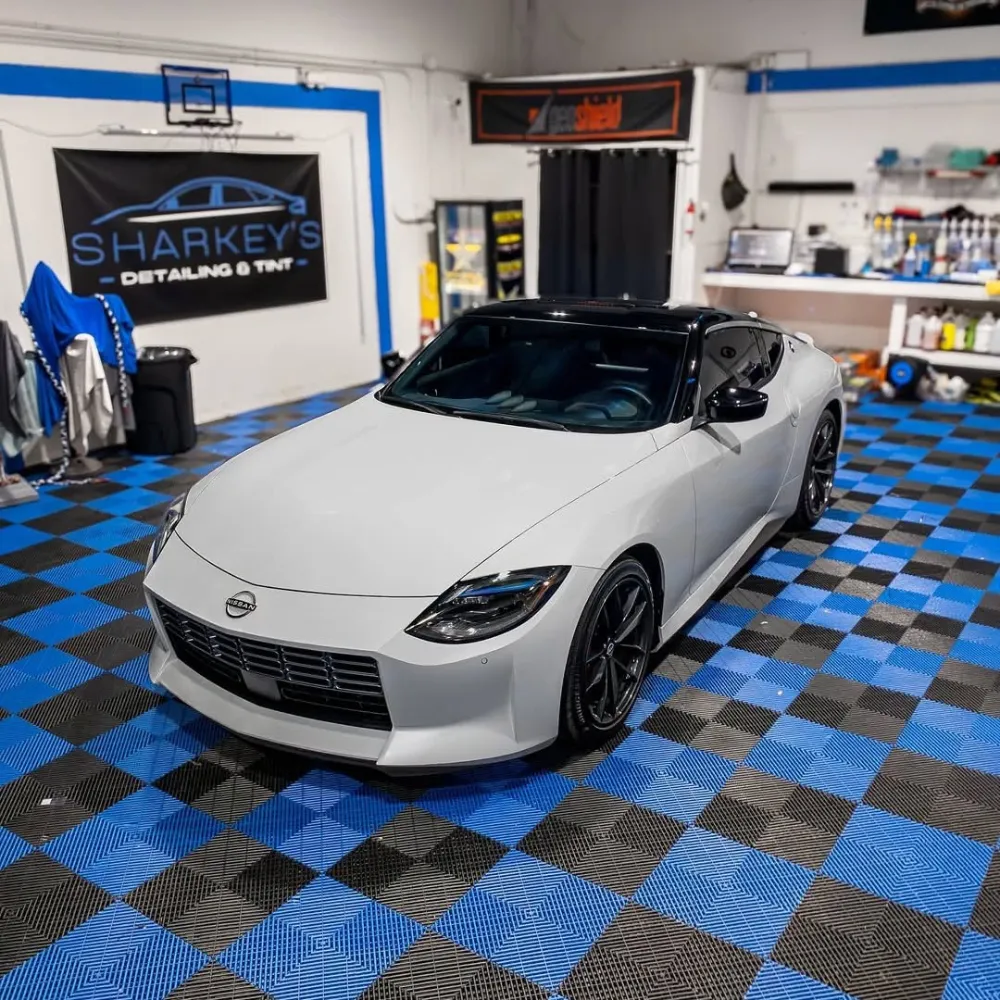
Sharkey’s Detailing & Tint LLC provides automotive detailing and protection services designed to help vehicle owners maintain their vehicles’ appearance and protect their investments.
When Should Existing Water Spots Be Addressed
Existing water spots should be evaluated before applying ceramic coating. If the deposits are minor and superficial, they may be easier to remove through appropriate cleaning.
If spotting has become etched into the clear coat, more extensive correction may be required.
Signs that water spots may need professional attention include:
- Spots that remain after washing
- Cloudy areas on otherwise glossy paint
- Rough or uneven areas
- Repeated spotting in the same locations
- Visible etching under direct lighting
Addressing these conditions before coating helps ensure the finished surface looks as good as possible.
Is Ceramic Coating Worth It For Water Spot Concerns?
Ceramic coating can be worthwhile for owners who want easier maintenance, improved water behavior, and additional protection for properly prepared paint. However, it should not be purchased with the expectation that it will eliminate water spots completely.
The biggest benefit is the combination of surface protection, hydrophobic behavior, improved appearance, and easier maintenance.
When considering Bradenton, FL ceramic coating, owners should also consider how the vehicle is stored, how often it is washed, local water quality, and how much time it spends outdoors.
In Summary
Ceramic coating can reduce the appearance and maintenance challenges associated with minor water spotting by creating a hydrophobic protective layer over properly prepared automotive paint. It helps water bead and move away more readily, but it does not make a vehicle completely immune to mineral deposits or eliminate the need for regular maintenance.
Sharkey’s Detailing & Tint LLC provides professional automotive detailing and ceramic coating solutions designed to help preserve vehicle appearance and protect the paint.
Contact us today to learn whether ceramic coating is the right choice for your vehicle.
People Also Ask
Does ceramic coating stop water spots?
No. Ceramic coating can reduce the tendency of contaminants to bond and can make water easier to remove, but water spots can still form if mineral-rich water dries on the surface.
Can ceramic coating remove existing water spots?
No. Existing water spots should generally be removed before coating. Depending on their severity, cleaning, chemical treatment, or paint correction may be required.
How do I prevent water spots on a ceramic-coated car?
Regular washing, proper drying, prompt removal of contaminants, and avoiding sprinkler water can help reduce water-spot formation.
Are ceramic-coated cars easier to wash?
Generally, yes. The hydrophobic surface can make water and some contaminants easier to remove during routine washing.