
Paint correction can restore a scratched or dull vehicle to a near like-new appearance when the damage is limited to the clear coat. It works by mechanically leveling surface defects such as swirl marks, oxidation, and light scratches through controlled machine polishing. While it does not repaint or replace damaged coatings, it can dramatically improve gloss, depth, and clarity when executed correctly. The final outcome depends heavily on paint condition, thickness, and prior maintenance history.
This process is a core part of modern Automotive Protection systems focused on preserving long-term vehicle value, appearance, and surface integrity.
What Paint Correction Actually Does to Automotive Paint
Paint correction is a precision polishing process that removes defects from the clear coat rather than hiding them. Unlike waxes or fillers that temporarily mask imperfections, correction permanently eliminates surface-level damage by leveling the paint at a microscopic scale.
Most defects visible under direct lighting, such as circular swirl marks or hazy oxidation, exist only within the clear coat layer. When corrected properly, the paint regains optical clarity and reflects light more evenly, creating a “wet” or glass-like appearance.
Defect Removal Capability Overview
| Condition Type | Correction Outcome | Technical Explanation |
| Swirl marks | Fully removed | Surface-level marring in the clear coat |
| Oxidation | Fully removed | UV breakdown of the top layer |
| Water spotting | Mostly removed | Mineral etching in the surface layer |
| Light scratches | Often corrected | Within clear coat depth |
| Deep scratches | Limited or none | Below the clear coat layer |
| Rock chips | Not correctable | Physical paint loss |
The key limitation is depth. Once damage reaches primer or base coat, correction can no longer safely restore the area.
Step-by-Step Professional Paint Correction Workflow
A professional correction process is highly structured to prevent unnecessary paint removal and ensure consistent results across all panels.
1. Pre-Wash and Decontamination
The vehicle undergoes a contact-safe wash followed by chemical decontamination to remove embedded iron particles, tar, and bonded contaminants. This prevents additional scratching during machine polishing.
2. Paint Inspection and Measurement
Technicians use high-intensity lighting and paint thickness gauges to evaluate clear coat safety margins. This step determines how aggressive the correction process can be without compromising paint integrity.
3. Cutting Stage (Compounding)
A cutting compound paired with a polishing pad removes deeper defects by leveling the clear coat. This stage eliminates most visible swirl marks and oxidation.
4. Refinement Stage (Polishing)
A finer polish restores optical clarity by removing haze left behind from compounding. This step enhances depth and gloss.
5. Final Inspection and Protection
Each panel is inspected under controlled lighting. Depending on the service package, a sealant or ceramic coating may be applied to preserve results.
Paint Correction vs Other Restoration Methods
Understanding how paint correction compares to other methods helps set realistic expectations.
| Method | Purpose | Result | Limitation |
| Paint correction | Defect removal | Permanent visual restoration | Clear coat only |
| Repainting | Full restoration | Factory-level reset | High cost, irreversible |
| Waxing | Temporary enhancement | Short-term gloss | No defect removal |
| Ceramic coating | Protection layer | Enhanced durability | Does not correct defects |
Paint correction is unique because it physically removes damage rather than concealing it.
Definition of Key Technical Terms
Clear Coat
The transparent protective layer over automotive paint. All correction work is performed within this layer.
Swirl Marks
Fine circular scratches caused by improper washing or drying techniques.
Compounding
The aggressive polishing stage is used to remove moderate defects.
Finishing Polish
A refining step that restores clarity and removes micro-haze.
Paint Thickness Gauge
A diagnostic tool used to measure safe polishing depth.
Holograms
Buffer-induced streaks caused by improper machine technique are removed during finishing stages.
Real-World Results and What Owners Can Expect
In real-world applications, results vary based on paint condition, maintenance habits, and whether the vehicle has been previously corrected.
- Light swirl damage: up to 90–95% visual improvement
- Moderate defects: 70–85% improvement in clarity and gloss
- Heavy neglect: noticeable restoration, but not a perfect finish
Vehicles frequently washed with automated brushes typically show the most dramatic transformation because swirl buildup is more uniform and surface-level.
However, it is important to understand that “like-new” refers to visual restoration under normal lighting conditions, not microscopic perfection under inspection lights.
How Long Does Paint Correction Last and What Affects It?
Paint correction results are permanent in the sense that the removed defects do not return. However, the visible quality of the finish can change over time depending on how the vehicle is maintained and protected.
Key factors that affect longevity
- Washing methods (hand wash vs automated brush systems)
- Exposure to dust, sand, and road debris
- Use of proper drying techniques
- Application of protective layers such as wax or ceramic coating
- Frequency of vehicle use and environmental exposure
Important distinction
Paint correction removes existing defects, but it does not prevent new ones from forming. Without a protective layer, swirl marks and micro-scratches can gradually reappear through normal driving and washing.
Best practice for long-term results
To preserve correction results for as long as possible, most professionals recommend pairing the service with a ceramic coating or high-quality sealant. This reduces direct contact abrasion and helps maintain gloss and clarity over time.
Misconceptions About Paint Correction
A common misconception is that Sarasota paint correction can fix all paint damage or entirely replace the need for repainting. This is not accurate and often leads to unrealistic expectations.
Myth vs Reality
| Myth | Reality |
| All scratches can be removed | Only clear coat-level defects can be corrected |
| More polishing equals better results | Over-polishing reduces clear coat thickness |
| Results are permanent without maintenance | New damage can occur without protection |
| Any detailer can safely correct paint | Requires training, tools, and measurement |
Overcorrection is a real risk. Removing too much clear coat can permanently weaken the paint system, which is why professional evaluation is essential before any correction begins.
Why Paint Correction Matters for Long-Term Automotive Protection
Paint correction is not just cosmetic; it is foundational for long-term vehicle surface preservation. A properly corrected surface improves both appearance and durability when paired with protective systems.
Corrected paint:
- Reflects light more evenly, improving gloss and depth
- Allows coatings to bond more effectively
- Reduces embedded contamination risk
- Enhances resale presentation value
- Creates a uniform surface for protection layers
For drivers researching paint correction in Sarasota, FL, this service is often the first step before a ceramic coating or a long-term paint protection system.
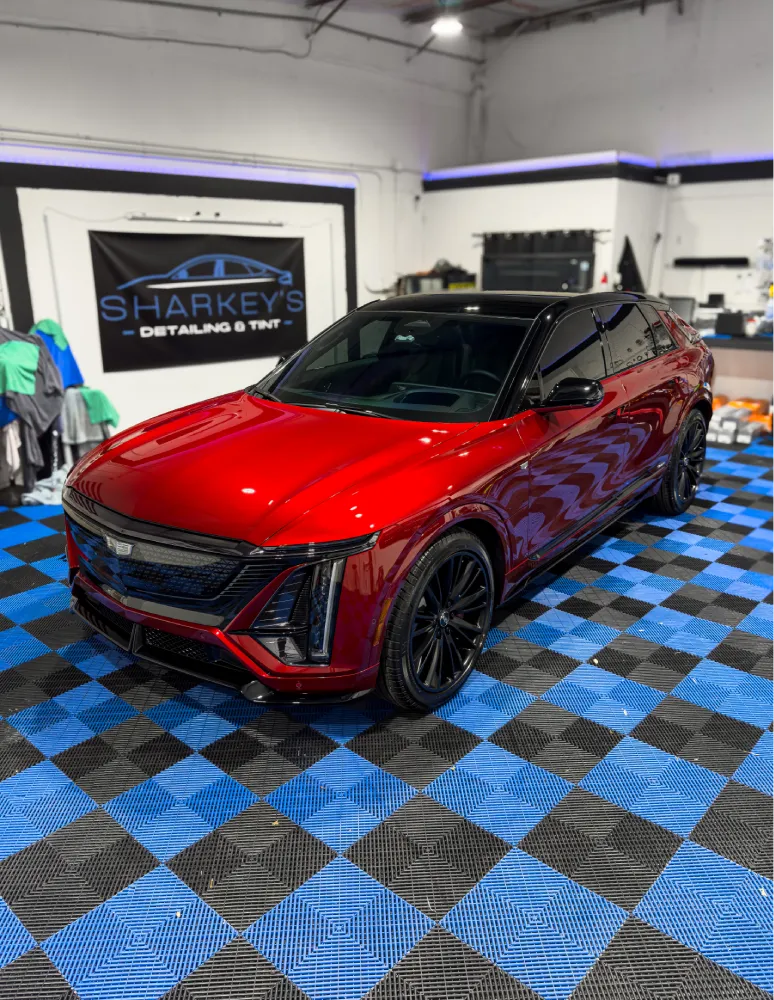
Service Standards at Sharkey’s Detailing & Tint LLC
Sharkey’s Detailing & Tint LLC follows a structured, inspection-based correction system designed to balance defect removal with paint safety. Every vehicle is evaluated individually to determine:
- Paint condition and thickness
- Safe correction level
- Required polishing stages
- Final protection recommendations
This approach ensures that correction is not applied as a one-size-fits-all process, but as a tailored refinement based on each vehicle’s actual condition.
When Paint Correction Is Not the Right Solution
Paint correction in Sarasota is not suitable for all paint conditions. It should not be used when:
- Paint is peeling or failing
- Scratches penetrate the primer or the metal
- Severe oxidation has damaged multiple layers
- Panels require structural refinishing
In these situations, repainting or localized repair is the correct solution. A proper inspection determines feasibility before any correction work begins.
Key Benefits of Paint Correction
- Restores gloss, depth, and clarity
- Removes swirl marks and oxidation
- Improves surface uniformity
- Enhances coating performance
- Increases visual resale value
- Reduces long-term surface degradation
In Summary
Paint correction is one of the most effective methods for restoring a scratched or dull vehicle to a near like-new appearance without repainting. It works by refining the clear coat to remove surface-level defects and restore optical clarity. While it cannot fix serious damage, it delivers significant visual improvement when performed professionally and paired with proper protection afterward.
For vehicle owners focused on long-term appearance, resale value, and surface preservation, paint correction remains a foundational detailing service offered by Sharkey’s Detailing & Tint LLC.
Ready to Restore Your Finish?
Contact us today to schedule a professional evaluation:
FAQ: People Also Ask
Can paint correction make a car look new again?
It can significantly restore gloss and clarity, depending on the paint’s starting condition.
Does paint correction remove all scratches?
No. Only defects within the clear coat can be safely corrected.
How long does paint correction last?
The results are permanent, but new defects can form without proper maintenance.
Should paint correction be done before ceramic coating?
Yes. A clean, defect-free surface is required for proper coating bonding.
Is paint correction safe for all vehicles?
Yes, when performed using proper inspection tools and controlled techniques.