
Ceramic coating reduces oxidation on darker vehicles parked outdoors by forming a chemically bonded protective layer over the clear coat, slowing UV degradation, heat stress, and environmental contamination. It does not stop oxidation entirely, but it significantly reduces the rate at which paint dulls, fades, and loses depth. This is especially important for darker colors, which show oxidation earlier and more visibly than lighter finishes.
In practical terms, ceramic coating acts as a long-term barrier between your paint system and the environment, helping preserve gloss, clarity, and color stability even in daily outdoor conditions.
How oxidation actually happens on automotive paint
Oxidation is a chemical reaction that occurs when oxygen interacts with a vehicle’s clear coat, accelerated by UV radiation and heat. Over time, this reaction breaks down the clear coat’s resin structure, leading to a chalky, dull appearance.
Darker vehicles experience this more aggressively because:
- They absorb more solar heat
- They show contrast loss more easily
- They amplify surface imperfections visually
Without protection, oxidation becomes noticeable faster on black, deep blue, and dark gray finishes.
How ceramic coating slows oxidation
Ceramic coatings are engineered from silica-based compounds that bond at a molecular level with the clear coat. Once cured, they form a semi-permanent layer that changes how the surface interacts with the environment.
Primary protective mechanisms:
- UV filtration layer reduces direct radiation exposure
- Oxygen exposure reduction slows the chemical breakdown of the clear coat
- Hydrophobic surface tension prevents water and contaminants from bonding
- Thermal stabilization reduces heat cycling stress on paint
This combination does not eliminate oxidation, but it significantly delays its progression.
Ceramic coating vs traditional protection methods
| Protection Type | UV Protection | Durability | Oxidation Resistance | Maintenance |
| Wax | Low | Weeks | Minimal | High |
| Paint Sealant | Moderate | Months | Moderate | Medium |
| Ceramic Coating | High | Years | Strong | Low |
Wax and sealants degrade quickly under outdoor exposure. Ceramic coatings in Sarasota, by contrast, maintain performance because they are chemically bonded rather than sitting on top of the paint surface.
Why darker vehicles benefit more from ceramic protection
Darker paint colors are more visually sensitive to surface degradation. Even minor oxidation appears as dullness or haze because light reflection becomes uneven.
Key reasons dark vehicles degrade faster:
- Higher heat absorption increases clear coat stress
- UV exposure causes faster pigment breakdown and visibility
- Swirl marks and oxidation are more noticeable
Ceramic coating helps preserve the optical depth of dark finishes by maintaining surface uniformity and reflectivity.
Environmental factors that accelerate oxidation
Even with protection, environmental conditions play a major role in how quickly oxidation develops.
Primary contributors:
- Prolonged sun exposure without shade
- Coastal air with salt and moisture
- Industrial pollution and airborne contaminants
- Infrequent washing or improper cleaning methods
Vehicles parked outdoors consistently will always require higher levels of surface protection to maintain paint quality over time.
Misconceptions about ceramic coating
Myth 1: Ceramic coating makes paint completely immune to oxidation
This is incorrect. Ceramic coatings reduce oxidation rates but cannot fully prevent environmental exposure or chemical aging.
Myth 2: Ceramic coating eliminates all maintenance
While it reduces washing frequency and effort, regular maintenance is still required to remove surface contamination.
Myth 3: All ceramic coatings perform the same
Performance varies based on formulation quality, surface preparation, and application technique.
A poorly prepared surface will not allow proper bonding, which reduces long-term effectiveness.
Applying our Hydro-Lock Detailing Protocol to solve this
The Hydro-Lock Detailing Protocol is a structured, multi-stage system designed to maximize coating performance by controlling every variable that affects bonding and durability.
Unlike a standard detailing process, it focuses specifically on long-term oxidation resistance and environmental durability.
Process breakdown:
- Deep Surface Decontamination
Removes embedded iron, tar, oils, and environmental fallout that interfere with bonding. - Paint Correction Stage
Levels the clear coat to eliminate swirl marks, oxidation, and surface defects. - Surface Energy Optimization
Prepares the paint at the molecular level to improve coating adhesion. - Ceramic Layer Application
Applies a controlled nano-ceramic barrier that bonds to the clear coat. - Curing and Stabilization Phase
Allows the coating to fully crosslink under controlled conditions for maximum durability.
This system is particularly effective for ceramic coating in Sarasota, FL, environments, where high UV exposure and humidity increase the risk of oxidation throughout the year.
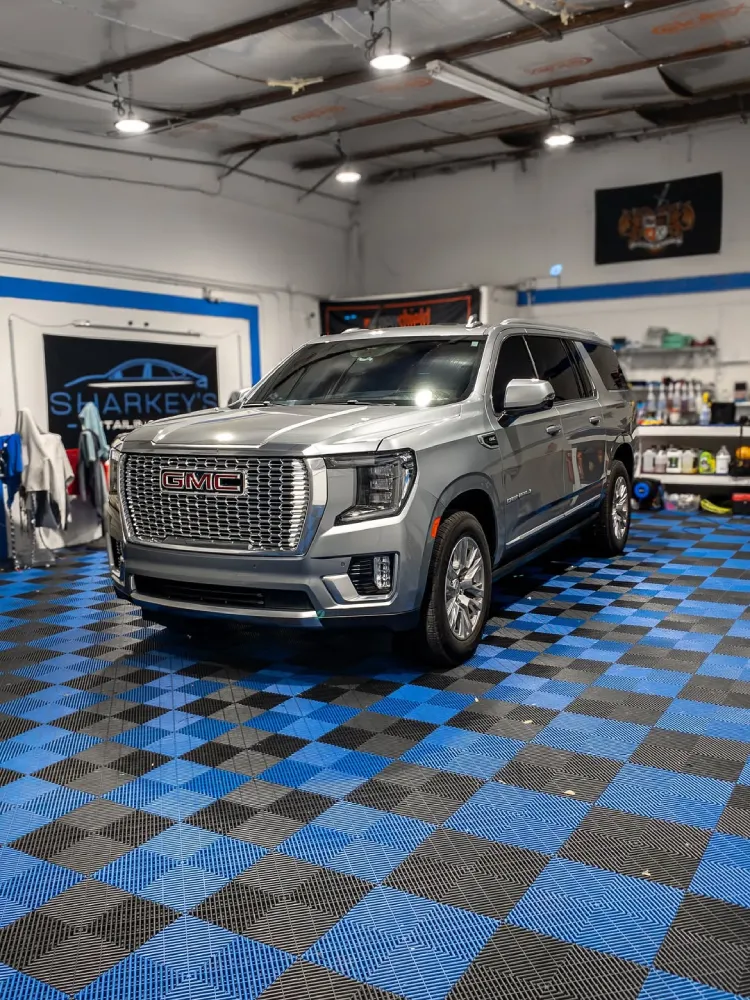
Real-world behavior on parked outdoor vehicles
Vehicles parked outdoors are subject to constant environmental cycling, which accelerates oxidation over time. Heat during the day expands the clear coat, while cooler nighttime temperatures contract it. This cycle gradually weakens unprotected surfaces.
In residential areas such as Palmer Ranch, repeated exposure to sunlight increases surface fatigue in unprotected paint systems. In Gulf Gate Estates, moisture and airborne debris increase contamination bonding rates. In North Sarasota, prolonged exposure to open-sky parking conditions intensifies UV-related fading.
These conditions demonstrate why structured protection systems are more effective than temporary surface treatments.
Industry misconception: ceramic coating replaces paint care entirely
A common misunderstanding is that ceramic coating eliminates the need for proper maintenance. In reality, it changes the maintenance strategy rather than removing it.
Coated vehicles still require:
- Regular pH-neutral washing
- Periodic decontamination
- Proper drying techniques
- Occasional inspection for surface contamination
Ceramic coatings reduce effort but do not eliminate responsibility for upkeep.
Performance insights for long-term protection
Proper application and preparation are more important than the coating product itself. Even high-quality coatings will underperform if applied over uncorrected or contaminated surfaces.
Long-term oxidation resistance depends on:
- Surface preparation quality
- Environmental exposure levels
- Maintenance frequency
- Coating application method
When all factors are properly controlled, Sarasota ceramic coatings significantly extend the visual lifespan of automotive paint systems.
In Summary
Ceramic coating is one of the most effective long-term solutions for reducing oxidation on darker vehicles parked outdoors. At Sharkey’s Detailing & Tint LLC, it is applied to significantly slow degradation caused by UV rays, heat, and contaminants. While it does not stop environmental exposure, proper application and maintenance help preserve gloss, depth, and clarity far longer than traditional protection methods.
For professional application and structured protection systems, contact us today to schedule a consultation and protect your vehicle with a long-term surface preservation strategy designed for real-world outdoor conditions.
FAQ:
Does ceramic coating completely stop oxidation?
No. It slows oxidation significantly but does not eliminate it.
How long does ceramic coating last on outdoor vehicles?
Typically between 2 and 7 years, depending on maintenance and exposure.
Can ceramic coating restore oxidized paint?
No. Paint correction must be performed before application.
Is ceramic coating worth it for dark-colored vehicles?
Yes. Dark paint shows oxidation faster and benefits more from UV protection.
Does washing remove ceramic coating?
No. However, improper chemicals or abrasive washing techniques can reduce its effectiveness.