
Paint condition directly affects how well a wrap adheres, looks, and performs over time. Clean, smooth, properly prepared paint provides a better installation surface. In contrast, peeling clear coat, heavy oxidation, deep scratches, and other defects can reduce adhesion, affect the finished appearance, and make existing imperfections more noticeable through the applied material. Proper preparation helps support better results and durability.
Why Does Paint Condition Matter Before Installation?
Vinyl conforms closely to the vehicle’s existing surface. It does not hide every underlying defect.
If the paint is smooth and stable, the installer can achieve cleaner coverage and more consistent adhesion. If the surface is damaged, contaminated, or deteriorating, those problems can interfere with installation and affect the finished appearance.
Before applying vinyl, an installer should evaluate:
- Paint adhesion and stability
- Clear coat condition
- Scratches and surface defects
- Oxidation or fading
- Dirt, wax, grease, and other contaminants
- Previous repairs or repainted panels
- Existing decals, badges, or adhesive residue
For drivers considering a vinyl wrap in Sarasota, FL, assessing the existing finish should be part of the planning process rather than an afterthought.
What Paint Conditions Can Affect A Wrap?
Not every paint imperfection creates the same installation concern. The severity and location of the defect matter.
Clear Coat Failure
Peeling or flaking clear coat is one of the more serious concerns. Vinyl needs a stable surface to adhere to. If the clear coat is already separating from the underlying paint, the adhesive may bond to an unstable layer rather than a sound finish.
Wrapping over failing clear coat can also make future removal more complicated because portions of the damaged finish may lift with the vinyl.
Heavy Oxidation
Oxidized paint can become chalky, rough, and porous. Severe oxidation may prevent the smooth, consistent surface needed for quality installation.
Light oxidation may sometimes be improved through appropriate surface preparation, but heavily deteriorated paint may require correction or repair before wrapping.
Deep Scratches
Small surface imperfections may not prevent installation, but deeper scratches can remain visible beneath the vinyl.
A wrap follows the contours of the panel underneath it. It should therefore not be viewed as a substitute for repairing significant paint damage.
Dents and Body Damage
Vinyl can conform around many vehicle contours, but it does not repair dents or restore damaged body panels.
A dent can remain visible after installation, particularly when light reflects across the wrapped panel. Significant body damage should generally be addressed before wrapping.
Repainted Panels
Repainted areas require additional attention because the quality and age of the repair can affect installation.
Freshly painted panels may need adequate curing time before vinyl is installed. If the paint has not properly cured, adhesive application and later removal may create unnecessary risks.
Paint Condition Definitions
Stable paint: A firmly bonded finish without significant peeling, flaking, or deterioration.
Oxidation: Surface deterioration that can make paint appear dull, faded, chalky, or rough.
Clear coat failure: Separation, peeling, or deterioration of the transparent protective layer over automotive paint.
Surface contamination: Dirt, grease, wax, silicone, residue, or other material that can interfere with adhesive contact.
Paint correction: A polishing process designed to improve certain surface imperfections such as swirl marks, oxidation, and some scratches.
Should You Correct Paint Before Applying Vinyl?
Paint correction may be appropriate when the existing finish has moderate surface imperfections that can be safely improved.
The goal is not necessarily to make every panel perfect. Instead, the objective is to create a cleaner and more uniform surface while addressing defects that could affect the finished appearance.
For example, light swirl marks may be reduced through polishing, while severe clear coat failure cannot simply be polished away. In that situation, refinishing or another repair may be more appropriate.
The correct preparation depends on the vehicle’s condition.
What Happens If You Wrap Damaged Paint?
Installing vinyl over damaged paint can create several potential problems.
| Paint Condition | Potential Effect On Installation |
| Clean, stable paint | Stronger foundation for installation |
| Light swirl marks | May remain visible depending on severity |
| Minor surface imperfections | May show through the vinyl |
| Heavy oxidation | Can affect adhesion and appearance |
| Peeling clear coat | Creates an unstable installation surface |
| Deep scratches | May remain visible under the vinyl |
| Major dents | Vinyl follows the existing body shape |
| Poor-quality repaint | May create removal or adhesion concerns |
This is why an inspection before installation is important. A vinyl wrap installer in Sarasota, FL can determine whether the vehicle needs cleaning, polishing, repairs, or additional preparation before application.
Does Vinyl Wrap Hide Paint Imperfections?
Vinyl can change the appearance of a vehicle, but it should not be considered a universal solution for damaged paint.
The material is relatively thin and follows the shape of the panel beneath it. As a result, raised areas, deep scratches, dents, and significant texture can remain visible.
Matte and satin finishes may change how light interacts with the surface, but they do not automatically eliminate underlying defects.
A quality installation begins with realistic expectations about what the material can and cannot conceal.
How Is Paint Prepared For Vinyl Wrap?
Proper preparation is one of the most important stages of installation.
1. Inspect The Vehicle
The installer examines the paint, identifies damaged areas, and determines whether any panels require additional work.
2. Clean The Surface
The vehicle must be thoroughly cleaned to remove dirt and contaminants that could interfere with adhesion.
3. Remove Residue
Wax, grease, adhesive residue, and other substances should be eliminated from the application surface.
4. Address Suitable Paint Defects
Depending on the condition, polishing or other corrective work may improve the surface before installation.
5. Allow Repairs To Stabilize
Recently repaired or repainted areas may require appropriate curing time before vinyl application.
6. Apply The Vinyl
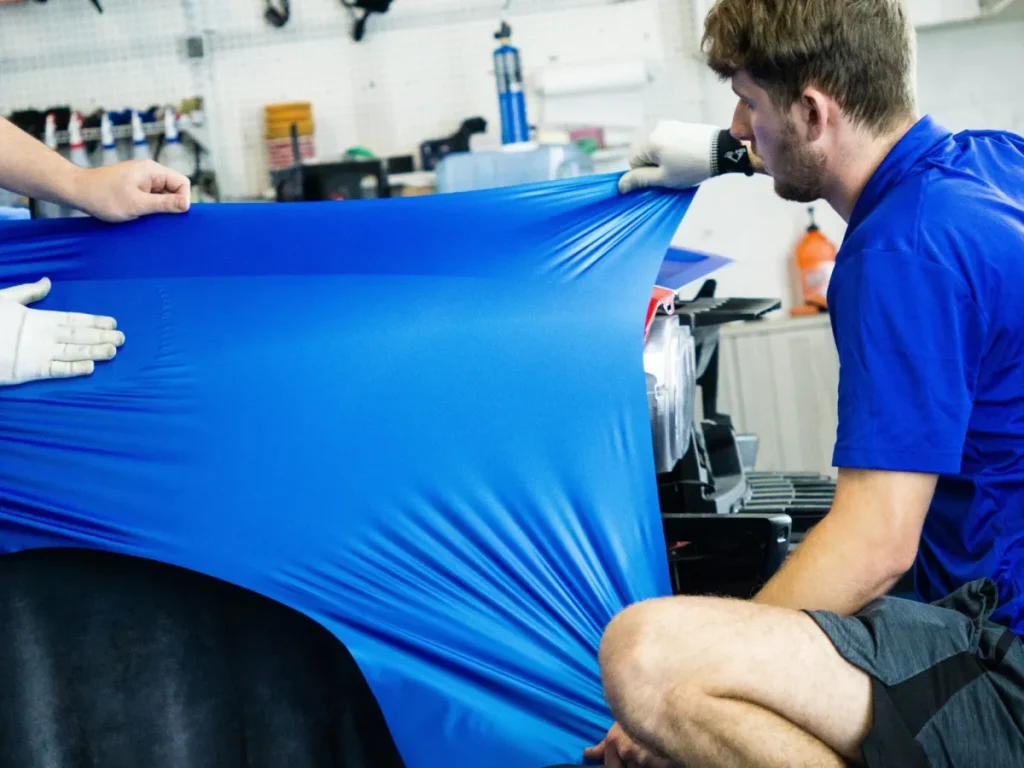
Once the surface is ready, the material can be positioned and installed across the vehicle’s contours.
7. Inspect The Finished Installation
Edges, seams, contours, and other areas should be checked for consistency before the vehicle is returned.
This preparation-focused approach helps explain why professional installation is more than simply placing vinyl over clean-looking paint.
A Common Myth: Vinyl Wrap Makes Paint Condition Irrelevant
A common misconception is that wrapping a vehicle eliminates the need to maintain or evaluate the original paint.
That is incorrect.
The condition of the underlying finish can affect adhesion, appearance, and removal. A wrap may protect portions of an intact finish from certain forms of everyday exposure, but it cannot restore failing clear coat or repair damaged bodywork.
The better approach is to evaluate the vehicle first and determine whether the existing finish is suitable for wrapping.
What Should You Ask Before Installing A Wrap?
Before approving the installation, ask the shop:
- Is my existing paint suitable for vinyl?
- Do any panels require paint correction?
- Are there areas with clear coat failure?
- Will previous repairs affect installation or removal?
- What preparation is included?
- How will damaged panels be handled?
- What maintenance is recommended after installation?
These questions can help prevent unexpected results and clarify the scope of the project.
Why Professional Installation Matters
A professional installer can identify problems that may not be obvious during a basic visual inspection.
Sharkey’s Detailing & Tint states that its technicians are trained in vinyl wrapping and focus on consistent techniques, clean edges, and professional workmanship. The company also emphasizes quality materials and careful preparation across its vehicle-care services.
For someone comparing vinyl wrap in Sarasota options, the installation process should therefore receive as much attention as the color or finish selected.
Final Takeaway
Paint condition plays a major role in vinyl wrap installation because the material depends on a clean, stable, and properly prepared surface. Minor imperfections may be manageable, but peeling clear coat, severe oxidation, deep scratches, dents, and poorly repaired panels can affect the final result.
For Sarasota, FL vinyl wrap projects, evaluating the existing finish before installation helps set realistic expectations and reduce potential installation issues. Sharkey’s Detailing & Tint also offers paint correction, detailing, paint protection film, ceramic coating, and window tint services.
If you are considering a wrap, contact us today to evaluate your vehicle’s condition and determine the appropriate preparation.
People Also Ask
Can vinyl wrap be installed over scratched paint?
Yes, depending on the severity. Light imperfections may remain beneath the material, while deep scratches or unstable paint may require correction or repair first.
Can you wrap a car with peeling clear coat?
It is generally not advisable to wrap areas with active clear coat failure without addressing the underlying problem. The unstable surface can affect adhesion and removal.
Does paint correction help before a vinyl wrap?
It can help when the paint has correctable surface defects. However, correction cannot repair severe clear coat failure, major body damage, or other structural paint problems.
Will vinyl wrap hide dents?
No. Vinyl follows the shape of the underlying panel, so dents and significant body imperfections can remain visible.
How do I know if my vehicle is ready for a wrap?
A professional inspection can determine whether the paint is clean, stable, and suitable for installation or whether additional preparation is needed.