
Installing paint protection film over contaminated paint can trap dirt, bonded contaminants, residue, and surface imperfections beneath the film. This can affect adhesion, clarity, appearance, and long-term performance, which is why thorough washing, decontamination, inspection, and appropriate paint preparation should come before installation.
Why Does Paint Preparation Matter Before PPF Installation?
Paint protection film needs a clean, properly prepared surface to achieve consistent contact with the vehicle’s paint.
A vehicle can look clean after a normal wash while still carrying contaminants that are not easily visible. These can include:
- Road film
- Iron particles
- Tar
- Tree residue
- Industrial fallout
- Fine dust
- Embedded environmental contaminants
Sharkey’s Detailing & Tint describes its paint protection film in Sarasota, FL, process as beginning with vehicle inspection followed by washing, decontamination, and polishing to create a clean surface before film application.
This preparation is important because PPF is intended to sit directly against the paint. Anything left between the two surfaces can affect the finished installation.
What Happens When PPF Is Installed Over Contamination?
Installing PPF over contamination can affect both appearance and adhesion.
1. Adhesion May Be Inconsistent
Dirt, residue, or contaminants can prevent the adhesive from making uniform contact with the paint. This may contribute to lifting or adhesion issues, especially around edges and curves.
2. Contaminants May Remain Visible
Because PPF is transparent, trapped particles can appear as:
- Specks
- Bumps
- Dark spots
- Hazy areas
- Uneven spots
3. Existing Paint Defects Remain
PPF protects the paint but does not correct existing scratches, swirl marks, oxidation, or stains. Proper preparation should address both contamination and paint condition before installation.
Can PPF Be Installed Over Swirl Marks And Scratches?
It can be installed over some existing imperfections, but whether that is advisable depends on the severity and the owner’s goals.
Light defects may remain visible after installation because the film is transparent. Deeper defects may require correction or repair before protection is applied.
The important distinction is:
PPF protects paint; it does not function as a substitute for paint correction or body repair.
A professional inspection can determine whether the existing finish should be corrected before installing the film.
For vehicle owners researching paint protection film in Sarasota, this evaluation can help determine whether the vehicle needs simple preparation or additional paint correction first.
What Is The Proper Surface Preparation Process?
Professional preparation should be methodical rather than limited to a quick wash.
Step 1: Inspect The Vehicle
The technician should examine the paint for:
- Scratches
- Swirl marks
- Oxidation
- Existing chips
- Previous repairs
- Contamination
- Clear-coat defects
This establishes the condition of the surface before film is installed.
Step 2: Wash The Exterior
A thorough wash removes loose dirt and road grime.
The goal is to reduce contamination before more detailed preparation begins.
Step 3: Chemically Decontaminate
Specialized products can help dissolve certain contaminants that ordinary washing does not remove.
Iron fallout and other bonded contaminants may require dedicated treatment.
Step 4: Mechanically Decontaminate When Appropriate
A clay-based or other mechanical decontamination process may be appropriate for remaining bonded contamination.
The exact process should depend on the condition of the paint.
Step 5: Polish When Necessary
If the paint contains defects the owner wants addressed before protection, polishing may be performed prior to film installation.
Step 6: Final Inspection
The surface should be inspected again before installation.
The objective is to confirm that the paint is clean, appropriately prepared, and ready for film application.
Does Paint Condition Affect The Final Appearance Of PPF?
Yes.
PPF can protect an excellent paint finish, but it does not automatically make poor paint look new.
Consider two vehicles receiving the same film:
| Paint Condition Before Installation | Potential Result |
| Clean and properly prepared | Clearer, more uniform appearance |
| Light swirls | Defects may remain visible |
| Heavy contamination | Surface irregularities may show through |
| Deep scratches | May remain visible beneath film |
| Oxidized paint | Film may preserve an uneven appearance |
| Corrected and prepared | Better foundation for installation |
The film itself is only one component of the finished result. The underlying surface matters just as much.
Can Contaminated Paint Cause PPF To Lift?
Contamination can interfere with consistent adhesion, which can contribute to installation problems.
However, lifting does not have a single cause. Edge preparation, installation technique, surface condition, film handling, environmental conditions, and post-installation care can all influence the result.
This is why it would be inaccurate to attribute every lifting issue solely to contamination.
A professional paint protection film installer in Sarasota, FL should evaluate the entire installation rather than assume a single cause.
What Areas Require The Most Care During Preparation?
Every area receiving film should be properly prepared, but complex sections deserve particular attention.
These can include:
- Front bumpers
- Hood edges
- Fender edges
- Side mirrors
- Headlight areas
- Door edges
- Contoured panels
These surfaces can collect contamination and may also have curves, seams, and edges that require precise installation.
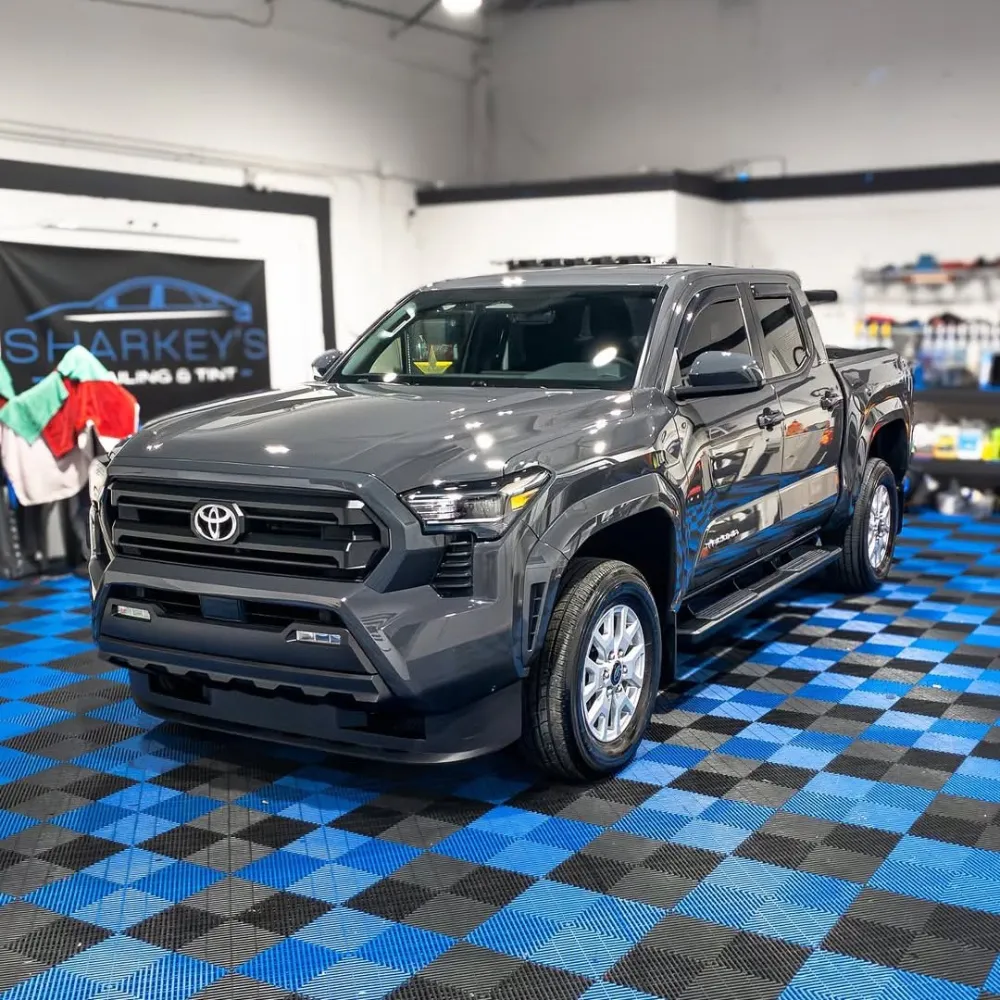
Sharkey’s offers partial-front, full-front, and full-body PPF packages that cover the front bumper, hood, headlights, fenders, mirrors, doors, and other exterior panels.
What If The Vehicle Has Recently Been Repainted?
Recently refinished panels require additional consideration.
The paint needs to be sufficiently cured per the refinishing system and body shop’s recommendations before the film is applied.
Applying PPF too early can create problems unrelated to ordinary surface contamination.
Before installation on a repainted panel, confirm:
- What paint system was used.
- When the panel was refinished.
- Whether the paint has reached the recommended cure condition.
- Whether polishing is appropriate.
- Whether the body shop has provided any restrictions.
A professional installer should consider the panel’s history before proceeding.
Common Myth: PPF Hides Paint Imperfections
PPF does not automatically hide every paint imperfection.
Because most PPF is transparent, existing scratches, swirls, stains, oxidation, or other defects can remain visible beneath the film.
In some cases, the film’s gloss can make the surface appear cleaner and more uniform, but that should not be confused with actual correction.
If improving appearance is important, paint correction should be considered before film installation, when appropriate.
How Can You Tell If Paint Is Ready For PPF?
A properly prepared surface should be:
- Clean
- Free from significant bonded contamination
- Properly decontaminated
- Dry
- Appropriately corrected when necessary
- Free from incompatible residues
- Thoroughly inspected
The exact preparation process should be tailored to the vehicle’s condition rather than treated as an identical procedure for every installation.
For example, a vehicle regularly driven through Arlington Park may accumulate different environmental contamination than a vehicle that is primarily stored indoors. The preparation should respond to the actual condition of the paint.
How Should You Choose A PPF Installer?
Price should not be the only consideration.
Ask potential installers about:
- Surface preparation: What steps are completed before film application?
- Paint inspection: How are existing defects identified?
- Coverage: Which panels and areas are included?
- Installation technique: How are edges and complex contours handled?
- Film specifications: Which product is being installed?
- Warranty: What does the manufacturer’s warranty cover?
- Aftercare: What should you avoid immediately after installation?
A detailed answer to these questions can reveal whether the installer treats preparation as a fundamental part of the process.
Sharkey’s states that its PPF installations emphasize careful alignment, clean trimming, high-quality film, and vehicle-specific preparation.
What Should You Do After PPF Installation?
Proper aftercare helps maintain the film’s appearance and performance. Follow your installer’s instructions for:
- Initial washing
- Water exposure
- Pressure washing
- Cleaning products
- Edge care
- Final inspection
If you notice lifting, persistent bubbles, contamination, or other issues, contact the installer instead of attempting repairs yourself. For drivers in Indian Beach/Sapphire Shores, proper aftercare helps preserve a clean PPF finish.
Preparation Determines the Foundation
Proper preparation is essential before PPF installation. A thorough process should include inspection, washing, decontamination, paint correction when needed, and final inspection.
Sharkey’s Detailing & Tint emphasizes surface preparation, careful film application, and clean trimming, with partial-front, full-front, and full-body coverage options.
For Sarasota, FL paint protection film, choose an installer that prioritizes preparation and installation quality. Contact us today to discuss your vehicle and PPF options.
People Also Ask
Can PPF Be Installed On Dirty Paint?
It should not be installed over significant contamination. Proper washing and decontamination create a cleaner surface for consistent film application.
Does PPF Hide Scratches?
Not necessarily. Transparent film can leave existing scratches and other paint defects visible underneath it.
Should Paint Be Corrected Before PPF?
Paint correction may be appropriate when the owner wants to improve the appearance of existing defects before protecting the finish. The need depends on the paint’s condition.
Can Contamination Cause PPF Problems?
Yes. Contamination can interfere with consistent contact between the film adhesive and paint and can remain visible beneath clear film.