
Car detailing results fade quickly because protective layers are constantly exposed to UV radiation, environmental fallout, chemical contamination, and mechanical wear from routine washing. Even high-quality ceramic coatings and sealants naturally degrade over time when exposed to real-world driving conditions. The true lifespan of any protection system depends on how well the surface is prepared, how the product is applied, and how consistently the vehicle is maintained afterward.
Durability is not determined by a single factor. It is the outcome of a system, surface preparation, coating chemistry, environmental exposure, and maintenance behavior all working together. When one part of that system is weak, performance drops significantly.
What Car Protection Layers Actually Do (and Why They Don’t Last Forever)
Protective detailing layers are engineered to reduce surface energy and slow down contamination bonding on automotive paint. These layers create hydrophobicity, improve gloss, and serve as sacrificial barriers between the environment and the clear coat.
However, every protection system has a natural degradation cycle. Even ceramic coatings lose performance over time as environmental exposure gradually alters the surface chemistry.
Core Protection Types
- Wax: A short-term sacrificial layer that enhances gloss and provides minimal protection
- Paint Sealant: A synthetic polymer layer designed for moderate durability and chemical resistance
- Ceramic Coating: A SiO₂-based coating that chemically bonds with clear coat for long-term protection
- Hybrid Coatings: Advanced formulations designed to improve heat resistance, slickness, and longevity
Why Detailing Protection Breaks Down Over Time
UV Exposure and Surface Oxidation
Ultraviolet radiation is one of the most consistent causes of degradation. It slowly breaks down molecular bonds in both the clear coat and the protective layer, reducing hydrophobic performance.
Environmental Contamination
Vehicles are constantly exposed to:
- Road salt and mineral deposits
- Industrial fallout and airborne pollutants
- Brake dust and iron particles
- Acidic rainwater and organic debris
These contaminants bond to the surface and gradually weaken protection performance.
Improper Surface Preparation
One of the most overlooked causes of premature failure is poor preparation before installation. If oils, oxidation, or embedded contaminants remain on the surface, coatings cannot bond properly. Instead, they adhere to residue, which significantly shortens their effective lifespan.
Incorrect Washing Practices
Improper maintenance accelerates breakdown:
- High-alkaline soaps strip protective layers
- Dirty wash mitts cause micro-abrasion
- Automated brush systems introduce surface damage
Over time, these practices erode even professionally applied coatings.
What Actually Determines Durability
Surface Preparation Quality
Proper preparation is the foundation of long-term performance. This process typically includes:
- Chemical decontamination to remove tar and iron particles
- Mechanical decontamination to smooth embedded contaminants
- Machine polishing to refine paint and remove defects
- Final solvent wipe to ensure a contamination-free surface
A properly prepared surface allows coatings to chemically bond rather than sit atop residue.
Product Chemistry and Engineering
Not all coatings perform equally. Key formulation factors include:
- SiO₂ concentration, which influences hardness and resistance
- Cross-linking polymers that improve structural stability
- Solvent systems that control leveling and bonding behavior
Higher-quality formulations degrade more slowly and maintain hydrophobic performance longer under stress.
Application Conditions
Environmental conditions during installation matter significantly:
- High humidity can interfere with curing reactions
- Excess heat may cause uneven flashing
- Dust contamination reduces coating uniformity
- Poor lighting or rushed application increases error rates
Controlled environments consistently produce more reliable and longer-lasting results.
Curing and Bond Formation
After application, coatings undergo a curing process where chemical bonding strengthens over time:
- Initial adhesion phase begins surface bonding
- Intermediate phase develops hydrophobic properties
- Full cure establishes maximum hardness and resistance
Interrupting this process, especially through water exposure, can permanently reduce durability.
Durability Comparison of Common Protection Systems
| Protection Type | Expected Lifespan | Resistance Level | Maintenance Requirement |
| Wax | 4–8 weeks | Low | High |
| Sealant | 3–6 months | Medium | Medium |
| Ceramic Coating | 2–5 years | High | Low–Moderate |
| Hybrid Coating | 3–7 years | Very High | Low |
These ranges assume proper installation and realistic driving conditions.
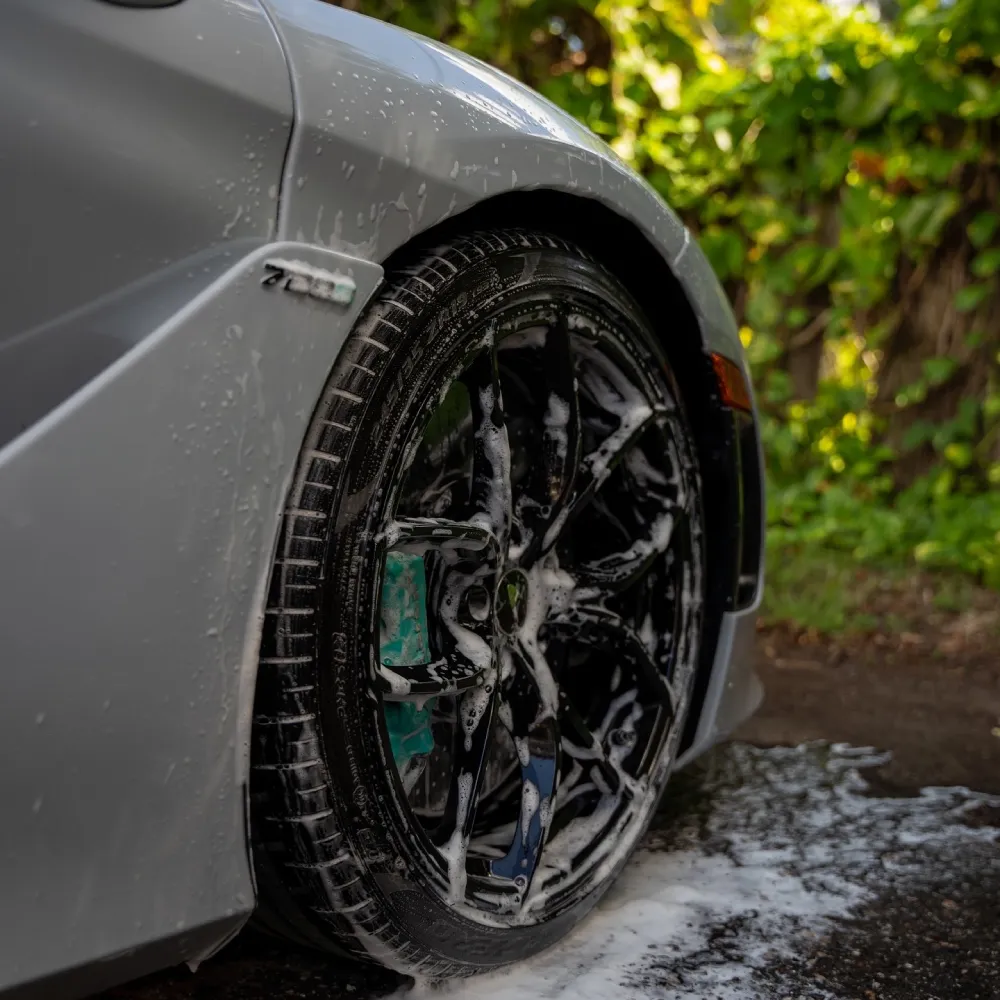
Professional Process for Long-Term Protection
Long-term surface protection is achieved through a structured application process designed to maximize durability and performance. This approach helps minimize inconsistencies and reduces the risk of premature coating failure.
Typical Process Includes:
- Thorough surface cleaning and decontamination
- Surface preparation to improve clarity and smoothness
- Removal of residues that may affect coating adhesion
- Careful application of protective coating layers
- Controlled curing to promote proper bonding
- Recommended maintenance guidelines for ongoing performance
Following a systematic process helps ensure the protective coating adheres correctly and delivers consistent, long-lasting results.
Real-World Factors That Affect Longevity
Environmental exposure plays a major role in how long protection lasts. Vehicles exposed to constant sunlight, humidity, and road salt will always degrade faster than those stored indoors.
For example, a vehicle undergoing car detailing in Longboat Key, FL conditions is typically exposed to salt air, high humidity, and intense UV radiation. These factors accelerate surface contamination and require more frequent maintenance cycles to maintain hydrophobic performance.
In contrast, vehicles in more controlled environments experience slower degradation due to reduced environmental stress.
Location-Based Environmental Differences
Coastal exposure creates additional challenges for protective coatings. In car detailing in Longboat Key scenarios, salt particles can bond to the surface more quickly, reducing water beading performance if not regularly removed through proper washing techniques.
This is not a failure of the coating itself but a natural result of environmental load. Maintenance frequency becomes the determining factor in long-term performance.
Why Some Vehicles Lose Protection Faster
Even with identical products, durability varies significantly based on usage patterns:
- Daily-driven vehicles accumulate more contamination cycles
- Frequent automated washing increases abrasion
- Outdoor storage increases UV and oxidation exposure
In contrast, vehicles with controlled storage and proper maintenance retain protection significantly longer.
Common Misconceptions About Detailing Longevity
A frequent misunderstanding is that ceramic coatings are permanent. In reality, they are long-lasting but still require maintenance to preserve performance.
Another misconception is that thicker application improves durability. Excess product can actually interfere with curing and reduce uniformity.
It is also often assumed that coatings fail suddenly, when in fact degradation is gradual and progressive.
Performance Specifications That Matter
Hydrophobic Behavior
The ability of a surface to repel water and reduce adhesion of contaminants.
Cross-Link Density
The internal structural strength of a coating that determines hardness and durability.
UV Stability
The coating’s resistance to breakdown from prolonged sunlight exposure.
Chemical Resistance
The ability to withstand exposure to acidic or alkaline contaminants.
Field Observations from Real-World Conditions
In practical applications, environmental stress consistently influences durability outcomes. Coastal vehicles require more frequent maintenance due to salt exposure, while garage-kept vehicles retain coatings longer due to reduced contamination cycles.
For example, Longboat Key, FL, car detailing environments often require more aggressive decontamination schedules because airborne salt accelerates bonding of contaminants to coated surfaces. Without maintenance, even high-end coatings will lose hydrophobic performance faster than expected.
These variations highlight why a standardized approach alone is not sufficient; real-world adaptation is essential.
About Sharkey’s Detailing & Tint LLC
Sharkey’s Detailing & Tint LLC provides professional automotive detailing services specializing in paint correction, ceramic coatings, and long-term surface protection systems. The focus is on controlled preparation, precision application, and durability-driven outcomes designed for real-world driving conditions.
Every service is built around a structured process that prioritizes surface integrity, coating performance, and long-term consistency rather than short-term cosmetic enhancement.
In Summary
Car detailing protection fades due to predictable environmental, chemical, and mechanical stress, not random failure. Long-term durability depends on the quality of preparation, the precision of application, environmental conditions, and maintenance discipline.
When these variables are properly controlled through structured systems at Sharkey’s Detailing & Tint LLC, protection performance becomes significantly more stable and long-lasting.
For professionally applied, durability-focused protection systems built for real-world conditions, contact us today to schedule a consultation.
Frequently Asked Questions
Why does ceramic coating lose its water beading?
Most often due to surface contamination rather than actual coating failure. Mineral deposits and road film reduce surface tension behavior.
How long does professional protection last?
Wax lasts weeks, sealants last months, and ceramic coatings can last several years with proper maintenance.
Does washing reduce coating lifespan?
Proper pH-neutral washing does not significantly damage coatings. Harsh chemicals and abrasive tools are the main risks.
What is the leading cause of coating failure?
Improper surface preparation is the most common factor behind premature degradation.