
Paint Correction in Sarasota, FL
Year-round sunshine, humid coastal conditions, salt air from the Gulf, and frequent afternoon rainstorms can gradually impact your vehicle’s finish, reducing its gloss and clarity over time. Whether you’re driving along Tamiami Trail, spending the day at Siesta Key Beach, or parking outdoors, these environmental conditions can leave visible defects that diminish your vehicle’s appearance. Paint correction in Sarasota, FL, restores your vehicle’s finish by removing swirl marks, light scratches, oxidation, water spots, and other surface imperfections. At Sharkey’s Detailing & Tint, we’ve helped drivers restore and protect their vehicles for years. Our professional multi-stage polishing process restores depth, clarity, and shine, delivering a like-new finish with enhanced gloss and long-lasting protection.
Professional Paint Correction for a Flawless Finish in Sarasota
Paint correction is a structured refinement process that levels the clear coat to reduce or eliminate surface defects. Sarasota’s strong sun, humidity, coastal air, and frequent rain can contribute to issues like oxidation, fading, and water spots over time. Unlike simple polishing or waxing, this process uses measured clear-coat removal to improve gloss, clarity, and reflectivity. Since every vehicle has different paint conditions, each service is customized to the level of imperfections, ranging from light swirl marks to deeper surface damage.
Tailored for Every Vehicle
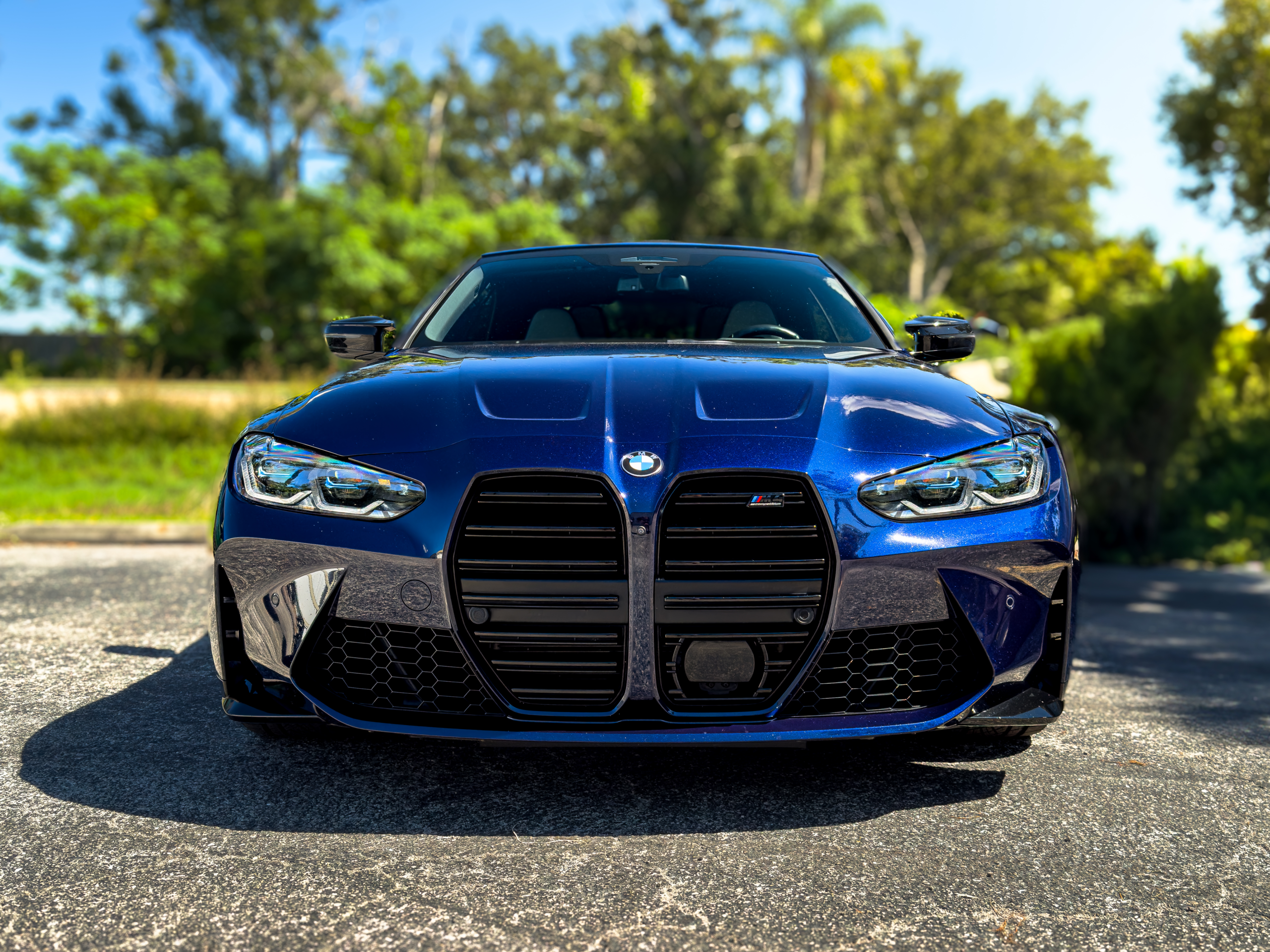
No two vehicles arrive in the same condition. A new car may only need light enhancement to remove dealership-induced swirl marks, while older vehicles may require multiple stages of correction to restore clarity.
The process is adjusted based on:
- Paint hardness and type
- Depth and severity of imperfections
- Vehicle age and maintenance history
- Previous detailing or coating applications
This individualized approach ensures the correction is both effective and safe, maintaining the integrity of the clear coat while improving its appearance.
Comprehensive Surface Correction
A thorough correction process addresses a range of common imperfections that accumulate over time:
- Swirl marks from improper washing techniques or microfiber contamination
- Light scratches caused by brushing against dust, clothing, or accessories
- Water spotting from mineral-rich rain or hard water exposure
- Oxidation resulting from prolonged UV exposure
- Surface haze that reduces clarity and depth
- General dullness or fading in the clear coat
Rather than aggressively removing every imperfection, the process is carefully controlled to preserve as much of the original clear coat as possible while still achieving a noticeable visual improvement.
Professional Tools & Proven Techniques
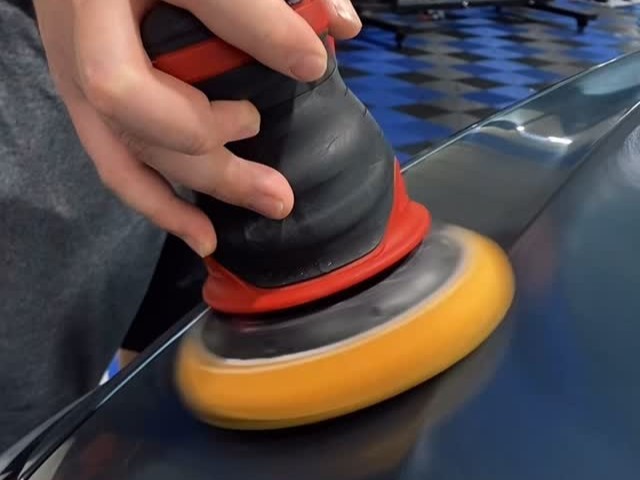
High-quality results depend heavily on the equipment and methods used. Professional dual-action and rotary polishing machines allow controlled correction depending on the severity of the defects. These tools are paired with specialized compounds and finishing polishes that are selected based on paint hardness, condition, and desired outcome.
Different foam and microfiber pads are also used throughout the process to adjust cutting or finishing ability. This layered approach ensures that each stage builds toward a refined, uniform surface without introducing new defects.
Lighting plays a critical role as well. Proper inspection lighting helps reveal imperfections that may not be visible under natural sunlight alone, allowing for precise correction and consistent results across all panels.
Why Sarasota Drivers Choose Paint Correction
Vehicle owners in Sarasota face unique environmental challenges that directly impact exterior surfaces. Constant sunlight exposure accelerates fading and oxidation, while humidity and coastal air introduce moisture and salt particles that can bond to paint over time. Combined with frequent rain and road grime, these conditions gradually reduce the visual quality of a vehicle’s finish.
Paint correction provides a practical way to reverse much of this surface degradation without requiring repainting or more invasive restoration work. It is often chosen by drivers who want to restore pride in their vehicle’s appearance or prepare it for long-term protection treatments.
We believe good service starts with honesty. To learn more about us, visit our page for further information.
Protect Your Vehicle’s Finish
While paint correction is primarily cosmetic, it also contributes to overall surface preservation by removing contaminants and imperfections that can trap debris or moisture. A cleaner, more uniform surface is less prone to uneven wear and allows protective products to perform more effectively. Maintaining a vehicle's exterior also helps preserve its perceived value and overall presentation, especially for those who regularly use it for business or travel.
Enhancing Long-Term Resale Value
A well-maintained exterior plays a major role in how a vehicle is perceived on the resale market. Visible imperfections such as swirl marks, oxidation, and a dull finish can reduce appeal and shape buyer expectations, even when the vehicle is mechanically sound. By restoring clarity and gloss, paint correction helps create a stronger first impression during trade-ins or private sales, making the vehicle stand out in competitive markets like Sarasota and the surrounding Gulf Coast while signaling careful ownership.
Easier Maintenance Between Details
After correction, the paint surface becomes smoother and more consistent. This reduces the ability of dirt, pollen, and road grime to adhere strongly to the surface. As a result, regular washing becomes more efficient and less time-consuming. Drivers often notice that their vehicles stay cleaner longer, even between professional detailing appointments. This makes ongoing maintenance simpler and more predictable.
The Perfect Foundation for Protection
Protective coatings and sealants perform best when applied to a properly refined surface. If imperfections remain beneath the surface, they become sealed in and remain visible, reducing the overall visual quality of the finish. By correcting the paint first, the surface becomes more uniform, allowing protective layers to bond evenly. This enhances gloss, improves water behavior on the surface, and helps maintain a cleaner appearance over time. It is especially beneficial in coastal environments like Sarasota, where environmental exposure is constant.
Enhance Your Vehicle’s Aesthetic Appeal
The Benefits of Paint Correction in Sarasota, FL
A corrected, glossy finish makes your vehicle look well cared for and visually sharp. Whether you drive daily or attend local events, paint correction instantly upgrades the way your vehicle appears. To see the latest news and trends regarding our services, explore our Blog page.
Improve the Paint's Longevity
A smooth, corrected surface is easier to maintain and less likely to collect dirt or contaminants. Removing defects early helps reduce long-term wear and keeps the paint in better condition.
Restore a Like-New Look
Many Sarasota drivers are surprised by how much newer their vehicle looks after correction. It removes buildup, fading, and years of micro-scratches, giving the paint a fresh look without the need for repainting.
Prepare Your Vehicle for Ceramic Coating
Paint correction is the best way to prep for ceramic coating. Coating bonds strongest to a clean, refined surface. Correcting the paint first ensures your coating locks in a smooth, flawless finish.
Our Step-by-Step Refinement Process
Each vehicle undergoes a structured process designed to ensure consistency, safety, and high-quality results. The approach is methodical, with each stage building toward a refined final finish.
Inspection & Surface Preparation
The process begins with a detailed inspection under controlled lighting. This allows technicians to identify swirl patterns, oxidation levels, water spotting, and any deeper defects that may require additional attention. The vehicle is then thoroughly washed using safe methods that minimize the risk of introducing new scratches. A decontamination stage follows, which removes embedded particles such as industrial fallout, tar, and bonded contaminants. This ensures a clean surface before any machine polishing begins.
Machine Polishing & Surface Refinement
Once the surface is fully prepared, machine polishing is performed in carefully controlled stages. Depending on the condition of the paint, this may involve a single refinement step or multiple levels of correction.
Cutting compounds are used first, as needed, to address more visible defects, followed by finer polishes to restore clarity and enhance gloss. Each panel is worked methodically to maintain uniform results across the entire vehicle. The process is monitored continuously to avoid unnecessary material removal while still achieving noticeable improvement.
Final Inspection & Protection Options
After polishing, the entire vehicle is inspected again to ensure consistency in finish and clarity. Lighting is used to confirm that defects have been reduced and that the surface reflects light evenly. At this stage, clients may choose to apply protective options. Many opt for ceramic coatings due to their durability, hydrophobic properties, and long-term performance benefits. These coatings help maintain the improved finish and simplify maintenance moving forward.
Service Areas
See Why Sarasota Drivers Trust Sharkey’s Detailing & Tint
Posted on Google
 Tyler Caswell4 days ago
Trustindex verifies that the original source of the review is Google.
Tj was great to deal with for getting my windows tinted on my work van. He’s personable and does great work. Highly recommend his services!Posted on Google kathy pearce9 days agoVery satisfied with the job extremely professional. Checked up one me after the job was done to see if I was satisfied and there was anything they could do. Love this place.Posted on Google
 Dwaine Snow9 days agoThe team was extremely helpful in explaining the PPF process and benefits and did a great job on my new car. We checked with a couple other places, but no one spent the time explaining things and making me feel comfortable like the Sharkey's team.Posted on Google
 Scott Campbell18 days agoHighly recommend Sharkeys. They installed PPF, ceramic coating, and window tint on my vehicle, and the quality is outstanding. TJ’s attention to detail, craftsmanship, and customer service is excellentPosted on Google
 Adam Cote25 days agoIf you’ve been looking for a window tint guy who actually cares about quality, look no further than TJ. He’s done three of my vehicles now, and every single one has turned out flawless. His attention to detail is top-tier—no bubbles, no peeling, clean edges, and he always takes the time to do the job right the first time. Beyond the quality of his work, TJ is just a great, honest guy to work with. He’s reliable, super professional, and treats your car like it’s his own. Finding a tinter you can trust repeatedly isn’t easy, but TJ is easily my go-to. Highly recommend him to anyone wanting a clean, professional setup!Posted on Google
 Debra Johnson27 days agoVery happy with product and results. Car looks great. Much cooler 😎 inside. Staff was exceptionally helpful knowledgeable courteous and so pleasant to deal with throughout entire process. Don't go anywhere else!Posted on Google
 Tom Sewell35 days agoGreat communication, excellent work.Posted on Google
 John Giusto35 days agoI brought my Shelby GT350 to Sharkey’s for Ceramic Coating.They did an exceptional job with the coating. I was just as impressed with the communication during the process. I am extremely fanatical about this car. They brought some defects they found that I never noticed. That proved to me I chose the right vendor. Great work at a fair price.Posted on Google
 Daniel Griffin37 days agoExcellent experience getting my windows tinted at Sharkey's. The cuts are clean, there are absolutely no bubbles, and the edges are perfect. It makes the car look great and already keeps it much cooler inside. Highly recommend them for high-quality tint work!+1Posted on Google
 Mike Koch41 days agoDid an excellent job on my 2026 Jetta.+1Verified by TrustindexTrustindex verified badge is the Universal Symbol of Trust. Only the greatest companies can get the verified badge who has a review score above 4.5, based on customer reviews over the past 12 months. Read more



Frequently Asked Questions About Paint Correction
Can paint correction fix dull or faded paint?
Yes. This process can significantly improve the appearance of dull, faded, or weathered paint by removing surface imperfections such as swirl marks, light scratches, oxidation, and haze. Instead of covering defects, it carefully levels the clear coat to restore clarity and shine. In many cases, it can bring back a glossy, like-new finish without the need for repainting. The final results depend on the condition of your vehicle’s paint and the severity of the imperfections.
Does Sarasota's climate affect my vehicle's paint?
Yes. Sarasota’s strong UV rays, high humidity, salt air, and frequent rain can gradually wear down your vehicle’s finish. Over time, these conditions may lead to fading, oxidation, water spots, and loss of gloss. Restoring the surface before applying a protective treatment helps improve both appearance and durability. Ongoing maintenance can also help reduce future damage caused by Florida’s climate.
Where can I get professional paint correction in Sarasota?
Look for a detailing specialist with experience restoring automotive finishes and using professional-grade polishing equipment. A quality provider will inspect your vehicle, explain the condition of the paint, and recommend the most appropriate level of correction. Before beginning any work, they should discuss realistic expectations and the results to be expected. Choosing an experienced professional helps ensure a safe process and a high-quality finish.
What's the difference between paint correction and polishing?
Polishing is generally used to enhance gloss and remove very light surface imperfections. Paint correction is a more detailed process that targets swirl marks, oxidation, scratches, and other defects by carefully refining the clear coat. Depending on the condition of the paint, the process may require multiple polishing stages to achieve the desired result. While both services improve appearance, correction provides a more noticeable restoration when the finish has significant imperfections.
How can I maintain my vehicle after paint correction?
Proper maintenance helps preserve the restored finish for as long as possible. Wash your vehicle using the two-bucket method, pH-neutral automotive soap, and clean microfiber towels to minimize new swirl marks. Avoid automatic car washes with abrasive brushes, which can quickly damage the surface. Adding a ceramic coating or another quality paint protectant can provide long-lasting protection and make future cleaning easier.
Ready to Restore Your Vehicle’s Finish?
If a vehicle’s exterior has begun to show signs of wear such as haze, swirl marks, or oxidation, a professional refinement process can significantly improve its appearance. The goal is to restore clarity and depth while preserving as much of the original finish as possible.
For drivers in Sarasota and surrounding coastal areas, this service is particularly valuable due to constant environmental exposure. Restoring the surface not only improves visual appeal but also creates a better foundation for ongoing protection.
Contact us here at Sharkey’s Detailing & Tint to request an estimate or schedule an appointment and bring back a cleaner, more refined look to your vehicle.
Contact Us Today to Schedule Your Appointment in Sarasota, FL
(941) 275-9850
6292 Tower Lane, Suite 2, Sarasota 34240